


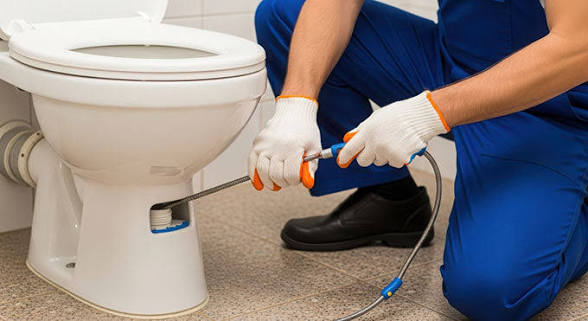
The clearest signs of a leaking waste pipe are a damp patch around the base of the toilet, a stain on the ceiling in the room below, a smell of sewage that does not clear with cleaning, or movement when the toilet is rocked gently. Any one of these is worth investigating, and more than one together usually means the leak has been developing for some time.
A toilet that’s slowly leaking from its waste pipe rarely floods a bathroom outright. It shows up as a damp patch, a faint smell, or a stain on the ceiling below, long before anyone notices anything wrong with the toilet itself. Catching a toilet waste pipe leaking early usually means a straightforward repair instead of replacing flooring or a ceiling. This guide covers the signs to look for, what’s usually causing it, and when to call someone in before it gets worse.
Why a Leaking Toilet Waste Pipe Is So Easy to Overlook
A toilet that is slowly leaking from its waste pipe rarely floods a bathroom outright. It shows up as a faint damp patch, a persistent smell, or a stain appearing on the ceiling below, often long before anything looks visibly wrong with the toilet itself. Because the waste pipe sits behind the pan or runs under the floor, there is no obvious place for a small leak to appear until it has soaked into something nearby. Most homeowners notice the smell or the ceiling mark well before they ever see actual water pooling on the floor. Catching this kind of fault early almost always means a straightforward repair rather than replacing flooring, joists or a ceiling.
The Main Warning Signs and What They Point To
1. Damp Patches and Staining Around the Base
Water pooling or discolouring the floor where the toilet meets the tiles usually points to a failed seal or a crack in the lower section of the waste pipe, rather than anything wrong with the cistern or the bowl itself. This kind of moisture often appears after flushing rather than sitting there continuously, so checking immediately after a flush rather than at a random point during the day gives a clearer picture. A slight tide mark around the base, even without obvious wetness, suggests water has been collecting and evaporating over a longer period than the leak itself might suggest.
2. A Sewage Smell That Stays After Cleaning
Waste pipes carry sewage as well as water, so a leak from the pipe itself tends to smell like one even before any visible dampness has appeared. A smell that lingers after the bathroom has been properly cleaned, particularly one that is strongest near the base of the toilet or around the floor level, is one of the more reliable early indicators of a waste pipe fault. Sewage smells that come and go depending on whether the toilet has recently been flushed are especially worth taking seriously, since they suggest the smell is connected directly to the flow through the pipe rather than to general ventilation or a dried-out trap elsewhere.
3. Ceiling Stains in the Room Below
A toilet on an upper floor that is leaking from its waste pipe often shows up first as a brown ring or damp patch on the ceiling of the room directly below. Importantly, the stain does not always appear directly beneath the toilet, because water travels along timber joists before it drips, sometimes appearing several feet away from where the actual leak is. A ceiling stain that seems unrelated to any obvious source above it is worth checking against the position of the toilet waste pipe on the floor above. Staining that appears or grows after wet weather is a roof issue, but one that expands after heavy toilet use points clearly to plumbing.
4. A Toilet That Rocks or Feels Loose
A pan that moves even slightly when pushed from side to side has usually had its base seal disturbed at some point. Loose fixing bolts alone can cause this without any leak, but movement at the base also means the seal between the pan outlet and the waste pipe is under repeated stress every time the toilet is used. Over time this breaks the seal down enough to allow waste water to escape during flushing. A toilet that has always felt slightly loose since a refitting job is a particularly common source of slow waste pipe leaks, since the pan connector may never have been properly seated after the toilet was moved.
The Most Common Causes Behind a Leaking Waste Pipe
A few specific faults account for the vast majority of toilet waste pipe leaks. The wax or rubber seal between the pan outlet and the waste pipe, usually called the pan connector, perishes or shifts out of position over time. This is far more common on toilets that have been removed and refitted at some point, since the connector can be damaged or incorrectly seated during the process. It is the single most common cause of a slow leak at the base, and it is also one of the more straightforward faults to fix once confirmed.
Cracked or corroded pipework further down the run produces similar symptoms, though it is less common in properties with newer plastic drainage systems. Older homes with cast iron or early plastic pipework are more susceptible to this, particularly where the pipe passes through a wall or under flooring where it cannot be inspected easily. A loose connection where the waste pipe meets the soil stack is another recurring fault, allowing waste to seep out gradually rather than all at once, which is why a leak of this kind can run for weeks before anyone in the household notices anything wrong.
Checking for a Leak at Home Before Calling a Plumber
A basic check does not need any specialist equipment. Dry the floor around the base of the toilet thoroughly, lay a few sheets of toilet paper flat on the floor around it, then flush several times and watch for where moisture reappears. This pinpoints whether water is escaping at the base during the flush cycle, which confirms a waste pipe or connector fault rather than condensation or splashing from another source. It takes less than ten minutes and gives a plumber much more useful information than a general description of dampness.
Adding a few drops of food colouring to the cistern and waiting twenty minutes without flushing is a useful secondary check. If coloured water appears in the bowl before flushing, the cistern is leaking internally into the bowl. This is a different fault from a waste pipe leak but worth ruling out at the same time, since both can cause a bathroom smell and both can be easy to confuse with each other during an initial look. Running both checks together covers the two most likely sources quickly and without any risk of making either worse.
A leak that is located further down the drain pipe rather than at the base connection often shows up as dampness on a wall or under flooring some distance from the toilet, since waste pipes typically run a fair way before joining the main soil stack. If the damp patch or smell appears at a distance from the toilet rather than directly around it, the fault is likely in the pipe run rather than the connector, which changes the repair approach slightly and is worth mentioning to a plumber before they attend.
What a Slow Leak Can Do to a Property Over Time
Left long enough, a slow leak from a toilet waste pipe softens floorboards, rots the timber joists beneath them, and in serious cases soaks through enough material to cause a ceiling below to sag or fail. None of this happens overnight, and most leaks are spotted well before they reach that stage, but it does happen gradually enough that the damage can be significant by the time it becomes obvious. A ceiling that has been absorbing water for several months is far more expensive to put right than a pan connector that needed replacing a few months earlier. The repair cost difference between catching this early and catching it late is usually substantial.
Steps to Take Once a Leak Is Confirmed
Acting promptly keeps a small problem from turning into a larger and more disruptive repair job. The steps below are worth following as soon as a leak is suspected rather than waiting to see whether things improve on their own.
1. Reduce use of the toilet as much as practically possible until the fault has been checked, since every flush adds more water to whatever is already leaking.
2. Dry the area around the base thoroughly and mark where any dampness was, since this helps a plumber identify the source faster when they arrive.
3. Check the ceiling in the room below if the toilet is on an upper floor and note any staining or soft patches, including how far from directly below the toilet they appear.
4. Avoid pouring drain cleaner or chemical products into the toilet, since they will not reach a leak in the waste pipe and can make certain pipe materials worse over time.
5. Book a plumber once the leak is confirmed rather than monitoring it over several weeks, since the longer water is getting into the surrounding structure, the more expensive the eventual repair is likely to be.
Getting It Sorted Before the Damage Spreads
A toilet waste pipe leak that is caught early is almost always a straightforward fix. Left alone, it becomes a flooring job, a ceiling job, or both. The signs are usually there well in advance, and a basic home check takes very little time to carry out. Acting on an early warning rather than waiting for something more obvious to happen is consistently the less disruptive and less costly approach.
0800 Homefix sends plumbers who deal with this exact type of fault on a regular basis. A proper inspection usually confirms the cause and gets it fixed in the same visit, without the need for repeat call-outs or prolonged investigation. If the signs described above are already showing in your bathroom, having it looked at sooner rather than later is the straightforward advice.
Frequently Asked Questions
1. Waste pipe leak or cistern leak: how to tell the difference.
A waste pipe leak usually smells of sewage and shows up at or below the base of the toilet. A cistern leak tends to appear as water inside the bowl or a running sound from the tank without much odour. Adding food colouring to the cistern and waiting twenty minutes without flushing quickly tells the two apart.
2. Using a toilet while it is leaking from the waste pipe.
It is better to limit use until the fault has been checked, since every flush adds more water to the material already absorbing the leak. A small waste pipe leak is unlikely to cause an immediate emergency, but continuing to use the toilet normally does accelerate the damage to surrounding flooring and structure.
3. A wobbly toilet and whether it always means a leak.
Not always. Loose fixing bolts can cause movement without any seal failure or leak. That said, a toilet that rocks puts repeated stress on the pan connector every time it is used, and it is worth checking the base for dampness whenever movement is noticed, since the two problems often develop together over time.
4. A smell coming from the toilet without any visible leak.
A smell without visible water usually means the leak is still small enough to be absorbed by surrounding material before it appears on the surface, or that the seal has degraded enough to let sewer gas through without letting much water past yet. Either way it is an early warning worth taking seriously rather than assuming the smell has another cause.
5. How long before a slow toilet leak causes structural damage.
It varies depending on how much water escapes per flush and what it is leaking onto, but weeks rather than days is the typical timeframe before any meaningful structural damage begins. Timber joists and floorboards absorb moisture steadily rather than failing suddenly, which is why the early signs described in this article matter so much.
6. Fixing a toilet waste pipe leak as a DIY job.
Replacing a pan connector is within reach for a confident DIYer with basic plumbing experience. Anything that involves cutting pipework, working under flooring, or investigating where the leak is coming from further down the run is generally better handled by a plumber who can confirm there is no additional damage before closing everything back up.
