


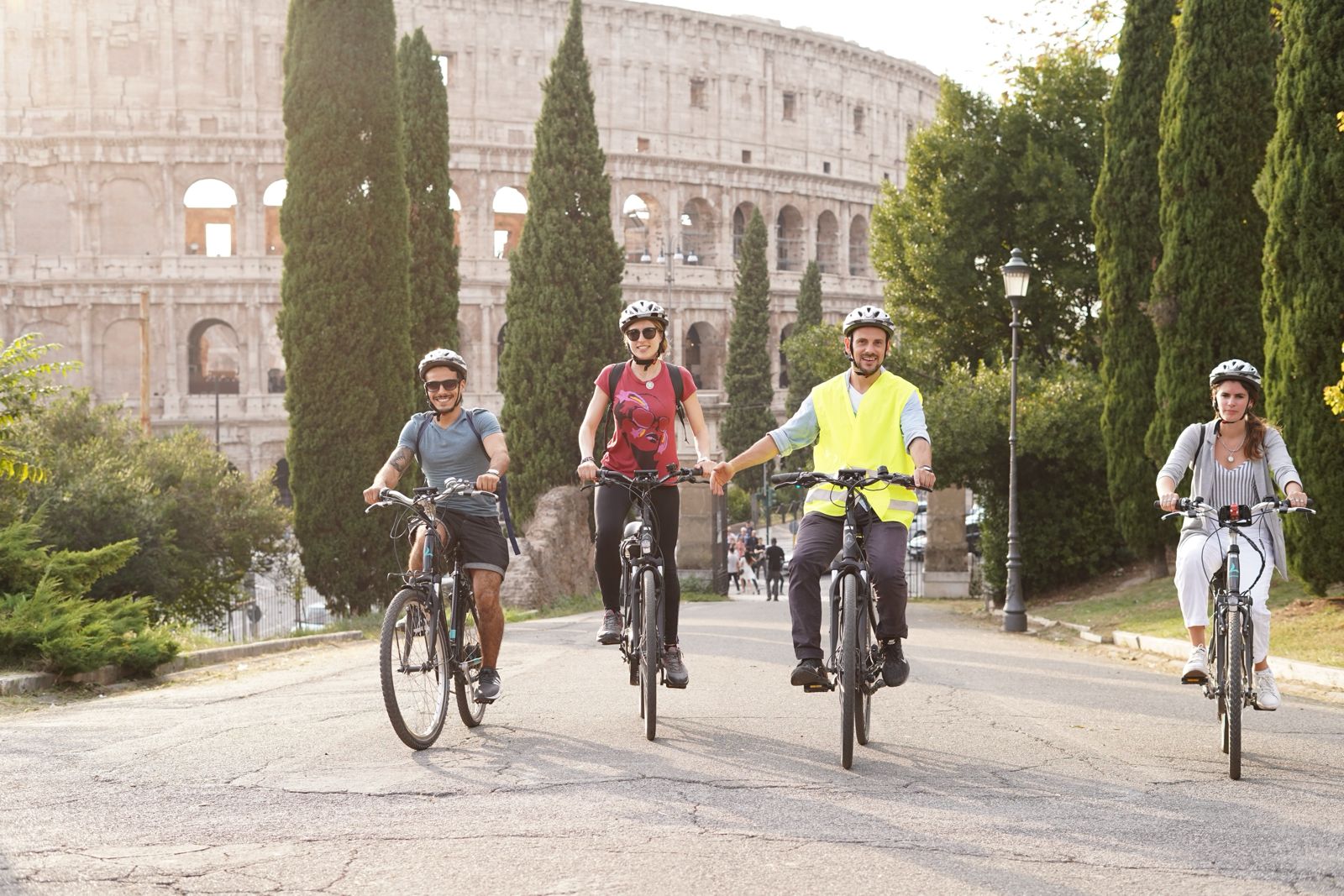
Rome is one of those cities that rewards the curious and punishes the unprepared. Millions of visitors arrive every year with the best intentions, yet still end up overpaying, overheating, and over-carrying their way through one of the world’s greatest cities. The difference between a frustrating trip and a memorable one often comes down to a handful of small decisions: knowing which taxi to take, where to fill your water bottle, where to actually eat, and how to move through the city without turning every walk into a logistical ordeal. If you want to experience Rome the way Romans do, start by avoiding these five classic mistakes that catch almost every first-time visitor off guard.
1. Taking an unlicensed taxi from the airport
The moment you step out of Fiumicino or Ciampino, you will be approached by men in suits offering you a ride into the city. Politely decline. Unlicensed “taxi” drivers, known locally as abusivi, routinely charge two or three times the official rate, sometimes more for families with luggage.
Licensed taxis in Rome are white, display a meter, and have a fixed rate from Fiumicino to anywhere inside the Aurelian Walls (currently €50). Look for the official queue outside the arrivals hall, or book a transfer in advance through the airport’s official partners. A two-minute wait can save you €40.
2. Buying bottled water when the city gives it away
Rome has over 2,500 public drinking fountains, the famous nasoni, scattered across every neighbourhood. The water is cold, clean, and constantly running. It comes from the same ancient aqueduct system the Romans engineered two thousand years ago, now modernised and monitored by ACEA.
Tourists who don’t know about the nasoni spend €2 to €3 per bottle, several times a day, in a city where perfectly good water is free on virtually every corner. Carry a reusable bottle, refill it at the nearest fountain, and spend that money on a proper suppli instead.
3. Eating directly beside the main monuments
The restaurants immediately surrounding the Colosseum, the Trevi Fountain, and the Vatican are, with very few exceptions, designed for people who will never return. Menus are laminated, translations are approximate, and a plate of pasta can cost €18 for something a Roman would refuse to serve at home.
Walk two or three blocks in any direction and the quality jumps while the prices drop. Romans eat at places without English signs out front and without a host waving laminated photographs at passing tourists. If a restaurant has a photograph of the food on the menu, keep walking.
4. Dragging your luggage across the cobblestones
This is the mistake that damages both your luggage and your experience of the city. Rome’s historic centre is paved almost entirely in sampietrini, small, irregular basalt cobblestones that have been there since the 16th century and show no signs of becoming suitcase-friendly. Every step with a rolling bag is a small battle: noisy, exhausting, and often bad for wheels not designed for uneven stone.
The practical solution is to drop your bags before you explore. Using secure luggage storage in Rome means you can leave your hotel in the morning, check out, and still spend the rest of the day walking the city hands-free, without hauling everything up and down metro stairs or navigating narrow streets with a 23kg suitcase. Services like this are available near the main stations and throughout the centre, typically for a few euros per bag per day and they represent one of the simplest upgrades to any Rome trip.
Unlike traditional providers that charge you for each individual suitcase, these smart, automated self-service lockers offer a flexible and secure solution under continuous video surveillance. Instead of paying per item, you simply rent an entire private locker for a flat daily rate, choosing the size that best fits your needs. You can pack in as many suitcases, backpacks, and shopping bags as the space can hold, giving you the flexibility to explore Rome at your own pace without waiting in lines, making it the most cost-effective and secure upgrade to your trip.
5. Trying to see everything in one day
Rome was not built in a day, and it cannot be seen in one. The tourists who sprint from the Colosseum to the Vatican to the Pantheon in a single morning come away exhausted and with a vague memory of queues. Romans find this approach baffling.
Pick a neighbourhood and actually walk it. Trastevere on a Tuesday morning. Testaccio around lunch. The Prati side of the river on a slow afternoon. The city reveals itself at walking pace, through a conversation with a shopkeeper or a caffè at a bar with no terrace surcharge. Slow down, and Rome becomes a completely different city.
How to really make the most of your time in Rome
Experiencing Rome like a local is less about knowing secret spots and more about not doing the things that mark you as someone who can be charged double. Avoid the unlicensed taxis, drink from the nasoni, eat two streets back from the monuments, leave your bags somewhere safe before you start exploring, and give yourself enough time to actually be present in the city.
A few more practical tips that make a real difference. Book the Colosseum and the Vatican Museums in advance, ideally for first thing in the morning: by 10:30 AM the queues are already hundreds of people long. If you are visiting on the first Sunday of the month, many state-owned museums and archaeological sites are free, but arrive early because everyone else knows it too. Mondays are generally a poor day for museums, as many are closed and the few that stay open attract larger crowds as a result.
On the subject of money, most Roman businesses now accept contactless payment, so there is rarely a need to carry large amounts of cash or pay ATM fees for withdrawals. And if a waiter brings your bill without you asking, do not feel pressured to tip: tipping in Rome is appreciated but never expected, and leaving a euro or two after a good meal is more than enough.
Finally, download an offline map before you arrive. Free public Wi-Fi covers only a fraction of the historic centre, and navigating Rome’s narrow, winding streets without data is its own kind of adventure. Rome has been hosting travellers for over two thousand years. It knows how to reward those who treat it with a little patience. And if Rome leaves you wanting more of Italy’s coastline and slower pace, it might be worth considering a Mediterranean yacht charter as your next step, the Italian Riviera and the Amalfi coast are a natural continuation of the same journey.
