


IVF has become one of the most significant advances in reproductive medicine, offering hope to couples who experience difficulties conceiving naturally. The process follows a series of carefully planned steps designed to maximize the chances of achieving a successful pregnancy.
The Main Stages of IVF
A typical IVF cycle consists of four key stages: ovarian stimulation, egg retrieval, fertilization in the embryology laboratory, and embryo transfer into the uterus. Each step plays a crucial role in the overall success of the treatment and requires close monitoring by fertility specialists.
Ovarian Stimulation
During a natural menstrual cycle, a woman usually produces one mature egg. In IVF, the goal is to stimulate the ovaries to produce multiple eggs, increasing the likelihood of successful fertilization and embryo development.
To achieve this, fertility medications known as gonadotrophins are administered over approximately twelve days. Throughout this period, the patient undergoes regular ultrasound scans and, in some cases, hormonal blood tests. These assessments allow specialists to determine the optimal timing for egg retrieval.
An important aspect of treatment is that ovarian stimulation is individualized. Factors such as age, body weight, fertility history, and previous IVF attempts influence the medication dosage and treatment plan. Since every woman responds differently, a personalized approach is essential for achieving the best possible outcome.
The Egg Retrieval Procedure
Egg retrieval is performed under sedation using a vaginal ultrasound probe. A specially designed fine needle is guided through the vaginal wall into the ovaries to collect fluid from the follicles, where the eggs are located.
The procedure generally lasts around twenty minutes. Afterward, patients spend a short period recovering from the sedative medication before returning home the same day. The collected eggs are immediately examined in the laboratory to determine the number of mature eggs available for fertilization.
Fertilization in the Embryology Laboratory
Once the eggs have been collected, they are placed in a specialized culture medium and maintained under carefully controlled laboratory conditions. At the same time, a sperm sample is prepared and processed to select the healthiest and most active sperm cells.
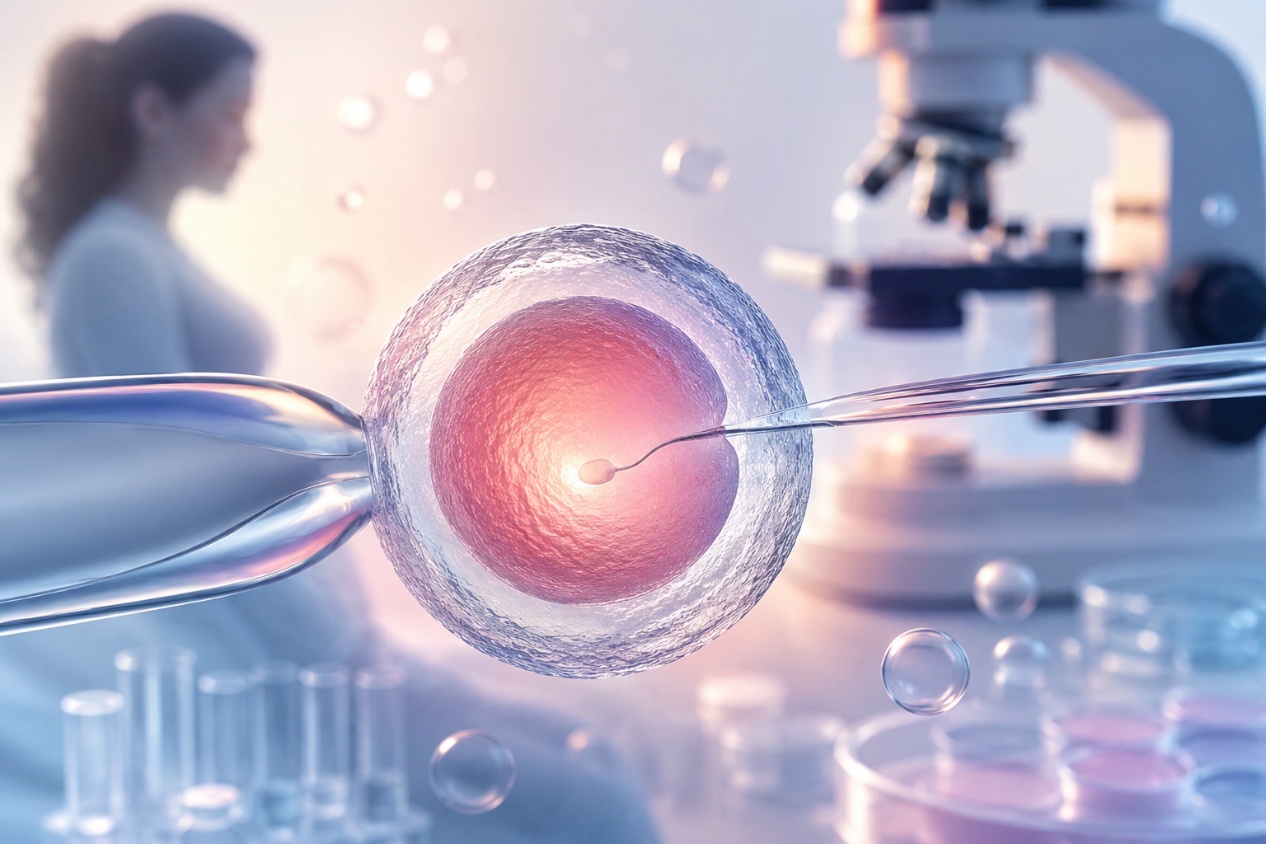
In cases where sperm quality is significantly reduced, a technique known as Intracytoplasmic Sperm Injection (ICSI) may be recommended. During ICSI, a single sperm is injected directly into an egg to facilitate fertilization.
Following fertilization, the embryos begin to develop and divide. Over the following days, embryologists closely monitor their growth and quality. By day five, some embryos reach the blastocyst stage, a more advanced phase of development associated with strong implantation potential. The embryos are carefully graded to identify those with the highest likelihood of success.
Embryo Transfer
Embryo transfer is often considered the most important moment of the entire IVF process. It typically takes place either three days after egg retrieval or once the embryos have reached the blastocyst stage.
The procedure is performed under ultrasound guidance and is generally painless, requiring no anesthesia or sedation. In most cases, a single embryo is transferred into the uterus, although two embryos may occasionally be considered depending on individual circumstances. Following the procedure, patients are usually encouraged to resume their normal daily activities.
After Embryo Transfer and Embryo Freezing
The period following embryo transfer lasts approximately 12 to 14 days and is known as the luteal phase. During this time, the embryo attempts to implant within the uterine lining. Hormonal support, most commonly progesterone, is often prescribed to help create favorable conditions for implantation.
If additional high-quality embryos are available, they may be frozen using vitrification, an advanced freezing technique that offers excellent survival rates after thawing. Embryo freezing provides couples with additional opportunities for future treatment cycles without the need to repeat ovarian stimulation and egg retrieval.
Conclusion
IVF is a highly structured and personalized fertility treatment that combines advanced medical expertise with individualized patient care. From ovarian stimulation and egg retrieval to embryo transfer and cryopreservation, every stage is carefully designed to maximize the chances of a successful pregnancy and help couples move closer to achieving their dream of parenthood.
For more information about IVF, you can contact the specialised reproductive medicine gynecologist George Christopoulos.
