


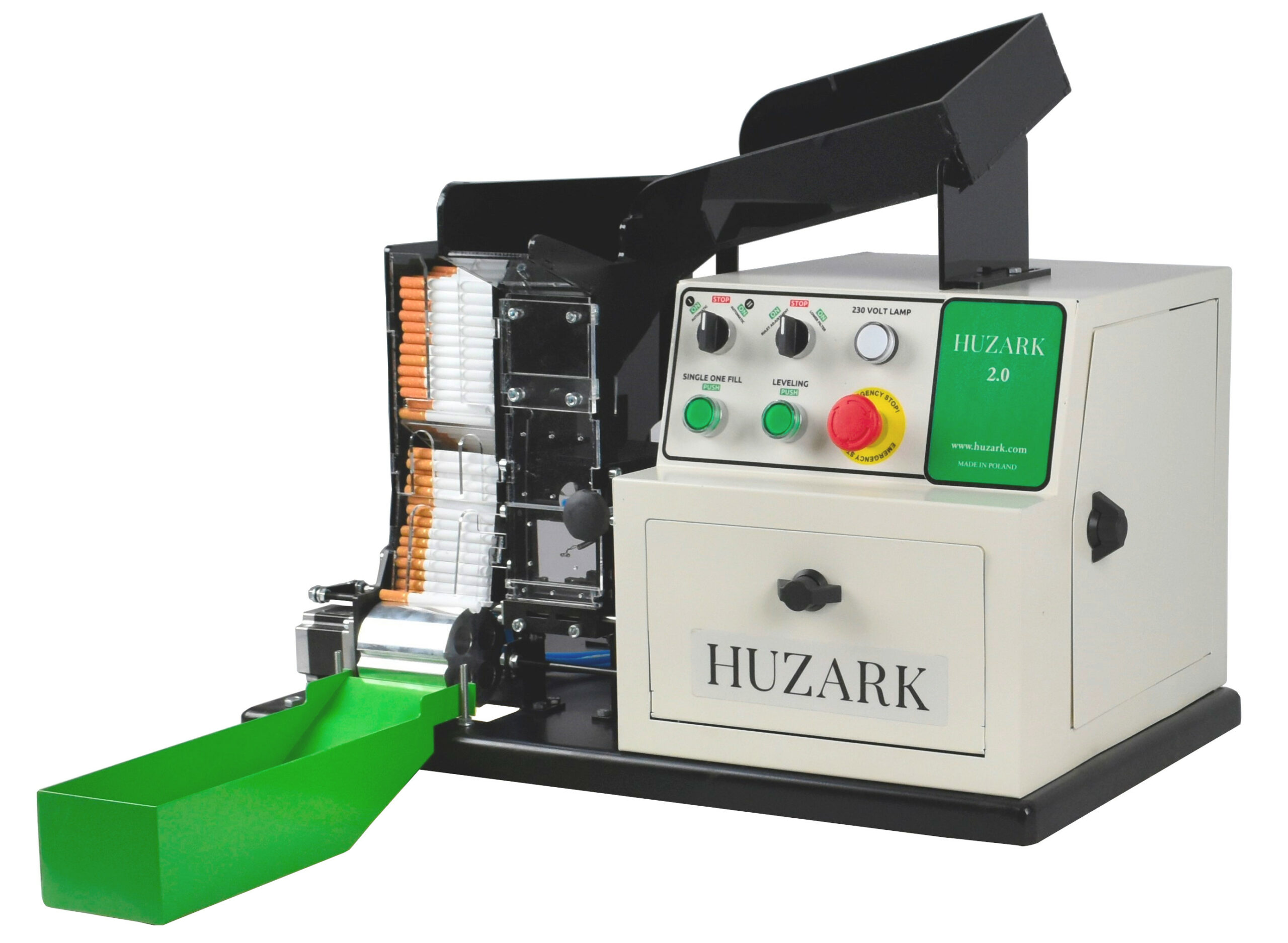
When manufacturers look for a fully automatic cigarette machine for sale, the real question is usually more practical: how much verified output, durability, and control can they get for the price? On Huzark’s website, the answer is presented through clearly defined machine parameters, listed prices, and a product range built for compact cigarette factories. Instead of broad promises, Huzark shows what its cigarette rolling equipment is designed to do in real production conditions.
A cigarette roller machine with defined output and clear pricing
Huzark’s current range includes several filling models positioned across different production levels. The published offer starts with the Huzark 2.0 model 2026 at about €2,200, followed by the Huzark 3.0 at about €2 400, the Huzark 4.0 model 2026 at €2 500, the 2.0 PRO at €2 500, the 3.0 PRO at €2 600, the 4.0 Pro at €2 800, and the Huzark Master at €3 400. That pricing structure matters because it gives manufacturers a visible path from entry-level professional output to higher-capacity production without jumping straight into oversized investment.
In performance terms, Huzark states that its cigarette roller machine and cig machine range covers output from about 50 to 80 cigarettes per minute. The Huzark Master sits at the top of this line, with three operating modes – 40, 60, and 80 cigarettes per minute – and capacity of up to 24 cartons per hour. For manufacturers comparing a machine cigarette setup by price alone, those numbers help put cost into context: the value is not just the machine itself, but the amount of repeatable production it can sustain.
Electric and pneumatic design that supports professional use
Huzark describes its machines as electric and pneumatic devices that require compressed air, typically 8 bar for selected models. The Huzark 2.0 page states that the machine combines electric and pneumatic power sources, while the 4.0 Pro page notes electric and pneumatic operation together with stainless-steel components. This makes the offer relevant for buyers searching for a cigarette electric machine – as long as this term is understood in the way Huzark actually presents the machines: professional filling systems powered by electricity and compressed air.
The same product pages also highlight durable construction. Huzark states on its homepage that the machines are built using hardened steel for key components such as the pressing or cutting knife and counter-knife, while selected models are described as using high-quality stainless-steel components. For manufacturers, that means lower wear, more predictable maintenance, and better protection of operating margins over time.
Why tubes for cigarettes and compatibility matter
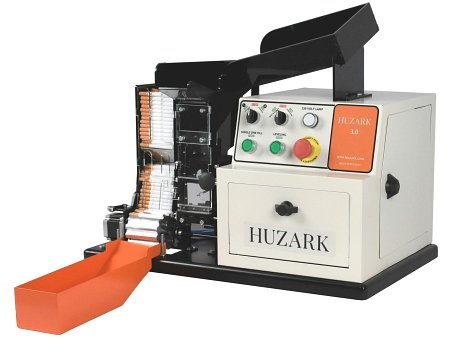
A cig roller machine is only useful if it works reliably with standard production formats. Huzark states that the Master is designed for filtered cigarette tubes of 8 mm with a 15 mm filter length, compatible with standard King Size tubes. The Huzark 3.0 page also specifies adaptation to filtered shell casings with a 15 mm filter and 8 mm rolling format. For manufacturers sourcing tubes for cigarettes, this kind of compatibility reduces setup friction and supports more predictable output quality.
Automatic features are another part of the value equation. Huzark’s PRO pages refer to single loading and automatic modes I and II, while the company’s broader product positioning emphasises precise filling and rolling. That is the more accurate way to understand the promise behind an automatic cigarette rolling machine or cig maker in Huzark’s range: not vague automation claims, but defined operating modes, clear throughput, and practical integration into a compact production setup.
Why Huzark combines quality and price
Huzark combines quality and price by making both visible. Prices are published. Output is published. Tube compatibility is published. Materials and manufacturing origin are published too, with the company stating that its cigarette-injector machines are made in the EU, in Poland. For manufacturers, that transparency matters. It allows a realistic comparison between acquisition cost and production potential, which is exactly what turns a machine offer into a business decision.
