


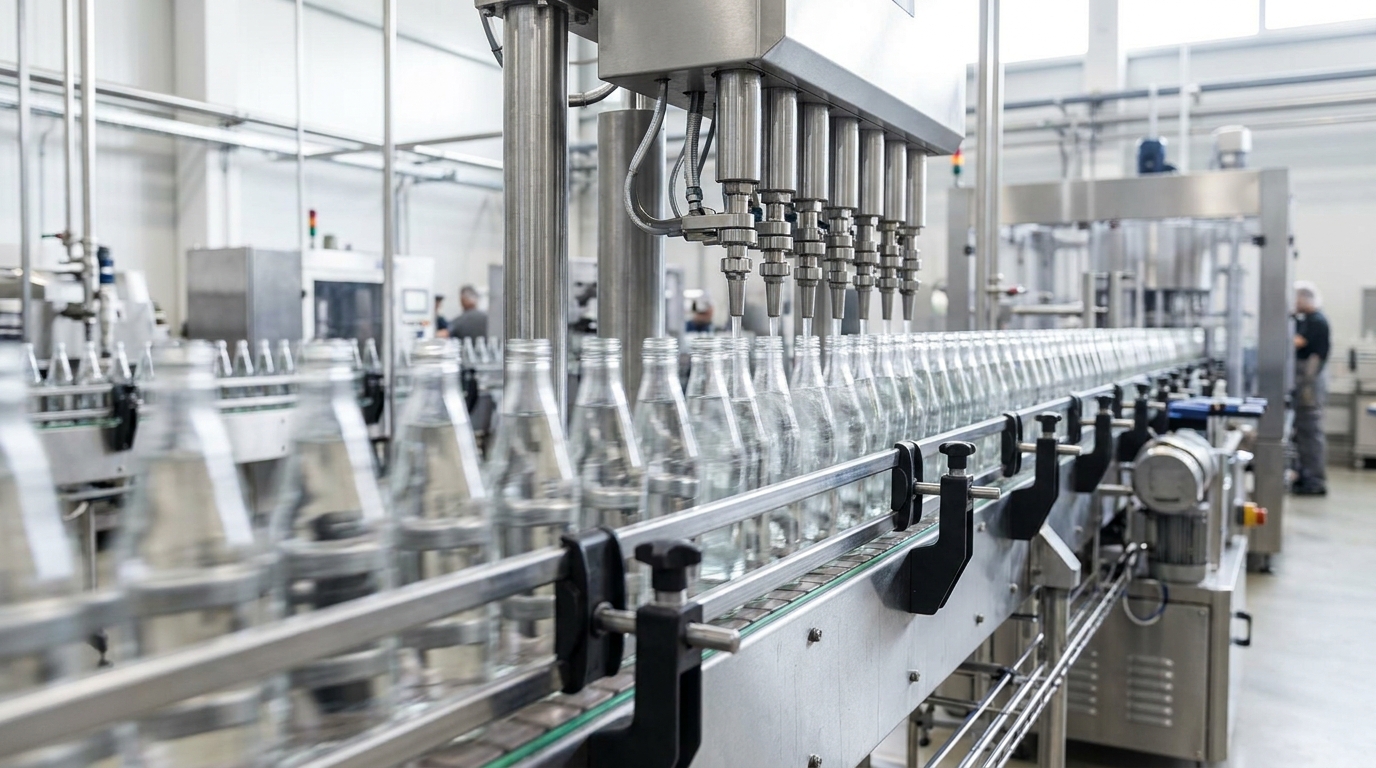
Pick up any drink from a supermarket shelf and you are holding the end product of a process that has changed beyond recognition. What was once a hall full of workers filling and capping containers by hand is now a synchronised line of machines working at speeds no human team could match — with fill levels accurate to the millilitre.
Why producers switched
The move to automation was driven by three things: consistency, hygiene and scale. Automatic bottling machines fill, cap and label thousands of containers per hour while keeping every unit identical — something hand filling can never guarantee. Closed filling systems also minimise human contact with the product, which matters enormously for shelf life and food safety standards.
Not just bottles
The same logic transformed tinned products. Modern canning machines fill and seam cans in one continuous cycle, protecting the contents from oxygen — the main enemy of freshness. That is one reason canned craft beer, cold brew coffee and even wine have gone mainstream in recent years.
What it means for smaller brands
Perhaps the most interesting shift is accessibility. Compact, semi-automatic lines now bring factory-grade packaging within reach of small breweries, juice makers and cosmetics producers. For many of them, the first packaging machine is the moment a hobby business becomes a real one: production stops being the bottleneck, and the team can finally focus on recipes, branding and sales.
Automation rarely makes headlines, but next time a perfectly filled bottle opens with that satisfying click, it is worth remembering the engineering behind it.
