


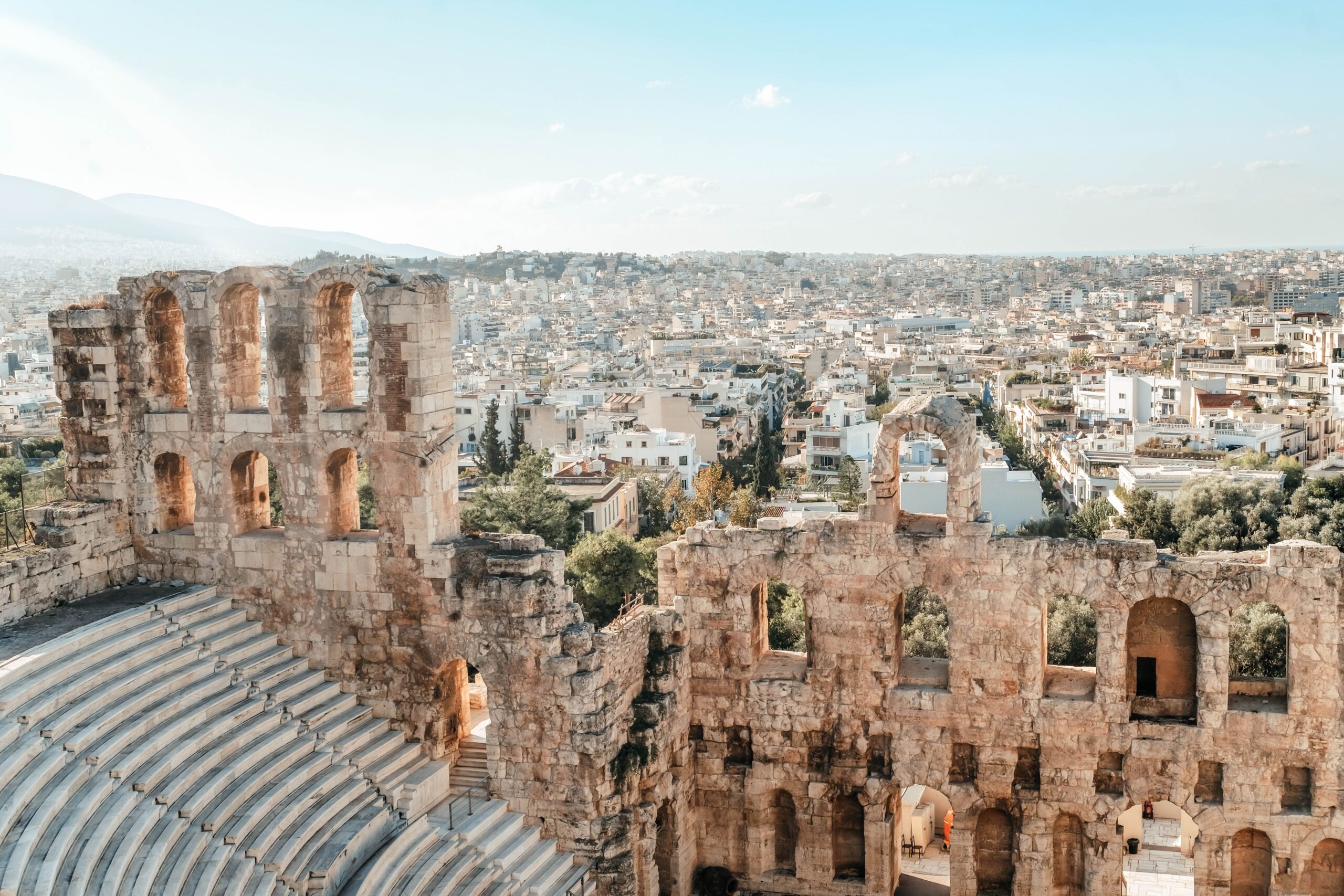
Athens is often introduced through a postcard: the Parthenon glowing above the city, a blue sky, perhaps a whitewashed lane in Plaka. The image is beautiful, but it is only a beginning. The real pleasure of Athens starts when the postcard expands and becomes a living city, with noise, dust, humour, impatient drivers, excellent coffee and stories hidden in plain sight.
A visitor can certainly wander alone. In fact, getting slightly lost in Athens can be a good thing. A side street may lead to a quiet courtyard, a tiny chapel or a view that was not mentioned in any guidebook. Still, there is a difference between walking through a place and reading it. Athens has an old habit of disguising important things as ordinary ones. A modest façade may carry the memory of another century. A market routine may explain more about local life than a museum label. A broken fragment of stone may belong to a much longer conversation.
This is where thoughtfully designed athens tours can change the experience. Not by turning the city into a classroom, but by giving visitors a way to connect what they see. A strong guide does not simply point and recite. They translate the city’s rhythm. They know when a myth will help, when a political detail matters, when silence is better than explanation and when a neighbourhood should be understood through food, trade, architecture or memory.
The centre of Athens is compact, yet emotionally dense. Around the Acropolis, every route seems to touch a different period. Roman remains stand near Byzantine churches. Neoclassical buildings speak of the young Greek state. Street murals bring the visitor back to the present with no apology. Even the cafés have their own role: they are not just places to rest, but small stages where Athenian life performs itself every day.
For travellers with limited time, this density can be both exciting and tiring. The temptation is to rush: one monument, one square, one museum, one photograph, then the next. But Athens rewards a different pace. A good walk allows space for context. Why did this hill matter? Why is this neighbourhood arranged this way? How did old Athens become the modern capital? Why do ancient myths still feel so close to daily speech? These questions make the city more memorable than any checklist.
There is also a practical side to guided exploration. Athens can be hot, busy and uneven underfoot. Knowing where to pause, when to avoid the harshest sun and how to move between landmarks without wasting energy makes a real difference. Comfortable shoes and water help, but so does a route planned by someone who understands how the city behaves during the day.
The most rewarding Athens experience is balanced. It includes the great monuments, because they deserve their fame, but it does not end with them. It leaves room for neighbourhoods, smells, sounds and small observations. It treats the city not as a backdrop for ancient glory, but as a place where many versions of Greece meet: classical, Byzantine, Ottoman, modern, local, global, serious and playful.
By the end of a well-paced day, visitors often realise that Athens is less intimidating than it first appeared. The city has its rough edges, but it is generous to those who pay attention. It offers history without distance and beauty without perfect order. Beyond the postcard, Athens becomes more complicated, more human and far more interesting.
