


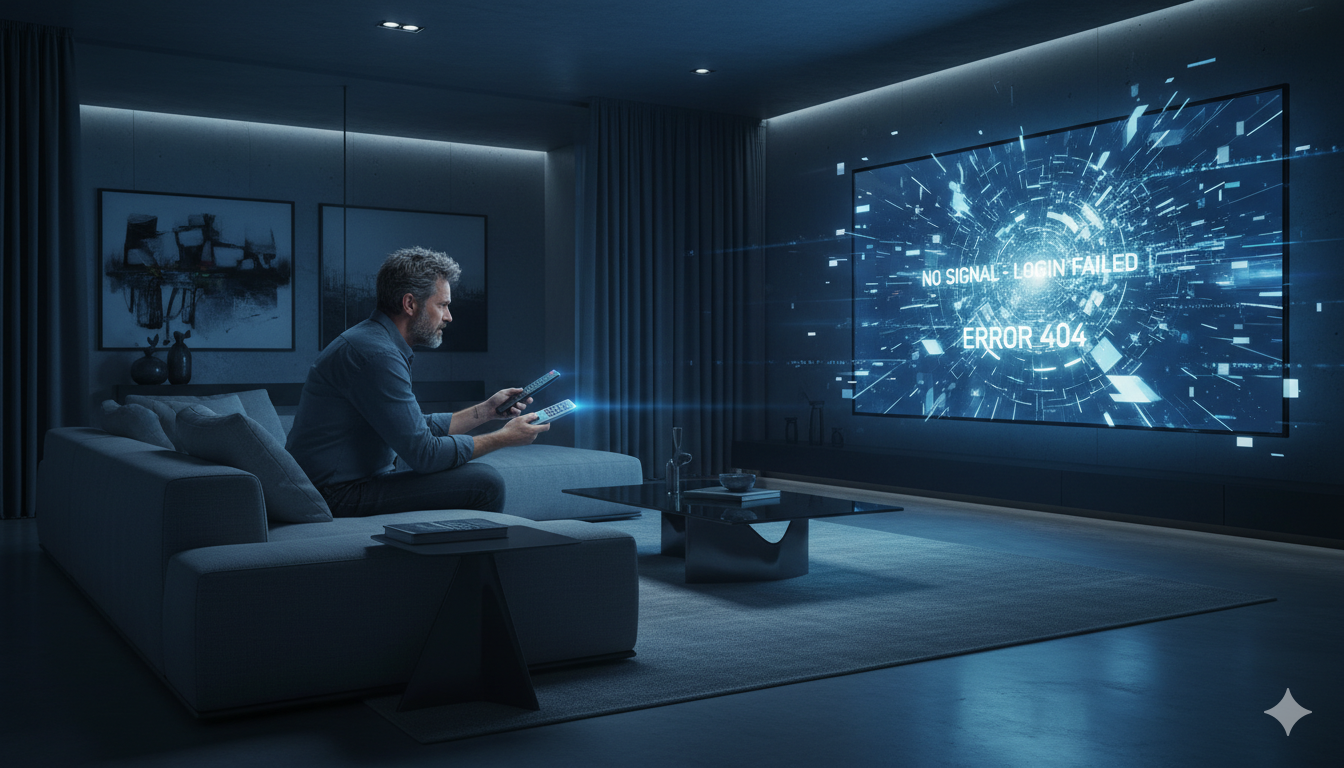
The streaming wars are over. There was no single winner. Instead, the battlefield has shifted. We are now in the era of “The Great Re-Bundling,” and for operators, this is the most critical moment in a decade. To survive this next phase, you must deploy the right ott technology to unify a fragmented market.
For the better part of ten years, the strategy was fragmentation. Every network, studio, and sports league built its own direct-to-consumer app. They wanted to own the customer data and the recurring revenue. It made sense on a spreadsheet in 2020. But in 2026, the reality is different. The average household is tired. They are tired of managing twelve different passwords. They are tired of checking three different apps to find out where a movie is streaming. And most of all, they are tired of the bill.
Subscription fatigue is no longer just a talking point; it is the primary driver of churn. According to recent data from Parks Associates, nearly 30% of consumers now cite “cutting expenses” and “too many services” as their top reasons for cancelling subscriptions. The novelty of having infinite choice has worn off. Users want simplicity.
This shift presents a massive opportunity for telecom operators and ISPs. You already own the billing relationship. You own the hardware in the living room. The race is now on to become the “Super-Aggregator”—the single interface where linear TV, SVOD, and FAST channels live together.
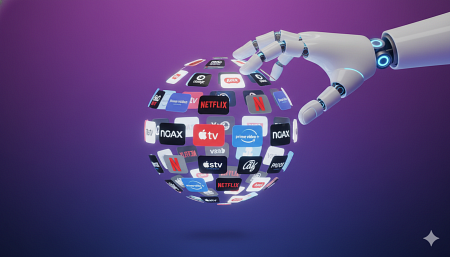
THE AGGREGATION IMPERATIVE
The logic for aggregation is simple. When services are bundled, churn drops.
Users are far less likely to cancel a service if it is tied to their broadband bill or part of a larger package. Recent studies by Hub Entertainment Research show that 42% of consumers perceive higher value in a service that aggregates multiple content sources into one feed. They are willing to pay for convenience.
For operators, this is the moment to reclaim the living room. You don’t need to produce original content to win. You just need to be the best at delivering everyone else’s content.
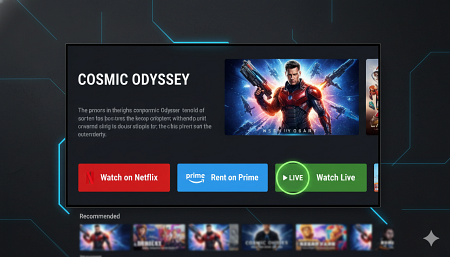
However, moving from a standard IPTV service to a modern Super-Aggregator involves serious technical hurdles. It isn’t as simple as pre-loading the Netflix and Disney+ apps on your set-top box. That is just co-existence, not aggregation. True aggregation means a unified search, a single watchlist, and a seamless user interface.
And that brings us to the biggest engineering headache of 2026: The Metadata Mess.
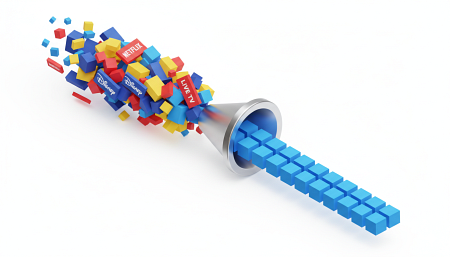
THE METADATA NORMALIZATION NIGHTMARE
If you want to build a “Universal Search” feature where a user types in “Action Movies” and gets results from live TV, HBO, and Prime Video in one list, you need data.
The problem is that every content provider speaks a different language.
- Provider A sends you an XML file via FTP once a day.
- Provider B offers a real-time JSON API but changes their schema every six months.
- Provider C, a FAST channel aggregator, provides metadata that often lacks episode numbers or proper thumbnails.
Your engineering team sits in the middle, trying to make sense of it all. If you map the fields incorrectly, the search breaks. If the API sync fails, the user sees “No Results” for a trending show. This friction kills engagement. Users don’t care about backend APIs; they just know your search bar doesn’t work.
To solve this, you need an ingestion engine capable of normalizing these diverse datasets on the fly. You need to map external IDs to your internal content management system automatically. This ensures that when a user clicks “Play,” the deep link fires correctly and opens the specific content inside the third-party app, rather than just dumping the user on the app’s homepage.
HYBRID DELIVERY: THE SILENT CHALLENGE
Beyond metadata, the physical delivery of content remains a hurdle. In 2026, we still rely on hybrid models. You have high-value live sports that need the stability of multicast (DVB or IP multicast), and you have on-demand content coming via unicast (OTT).
The challenge is the transition.
On older platforms, switching from a live TV channel to an OTT app often involves a “black screen” delay. The box has to drop the multicast signal, launch the app container, and buffer the stream. That 5- to 10-second gap is where you lose the user’s attention.
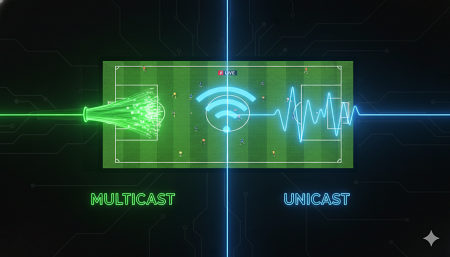
Modern middleware solves this by keeping the app layer active in the background. It manages the resources of the set-top box (STB) so that the transition feels instant. This requires a lightweight, highly optimized player that doesn’t bloat the hardware. If your software is too heavy, the box lags. If it’s too light, you lose features. Finding that balance is the job of your technology partner.
THE FUTURE IS UNIFIED
In 2026, content is still king, but convenience is the queen. The platform that offers the least friction will win the customer.
We are seeing a return to the bundle, but it looks different this time. It is digital, flexible, and user-centric. For operators, the technology you choose today will determine if you are the central hub of your customer’s digital life or just another utility pipe they want to switch off.
Don’t let legacy infrastructure hold you back. The technology exists to turn the chaos of fragmentation into a unified, profitable service. It’s time to use it.
