


Homeowners are increasingly turning away from large-scale extensions in favour of faster, lower disruption alternatives as renovation activity continues to slow across the UK housing market.
New figures highlighted by Savills show that planning consent for home renovations and extensions has fallen below 150,000 for the first time in more than a decade, sitting around 27% below the long-term average.
The slowdown comes despite a broad recovery in wider housing market activity, suggesting homeowners are becoming more cautious about taking on expensive building work in the current economic climate. Rising construction costs, higher borrowing rates and ongoing uncertainty around budgets will all contribute to this decline even if there is still appetite for home improvements.
Demand for extra space remains strong
Despite the slowdown in renovation activity, demand for additional living space has not disappeared. Instead, many households are looking at alternative ways to create extra room without the cost and disruption associated with full-scale building works. Things like garden rooms and loft or garage conversions are all popular alternatives to a full extension as they create the extra space you’re after without the need for complicated building works. Finding options that are both less expensive and can be done under permitted development rights without requiring full planning permission is a great loophole for homeowners and there’s a few different options available.
Garden rooms and conservatory alternatives gain popularity
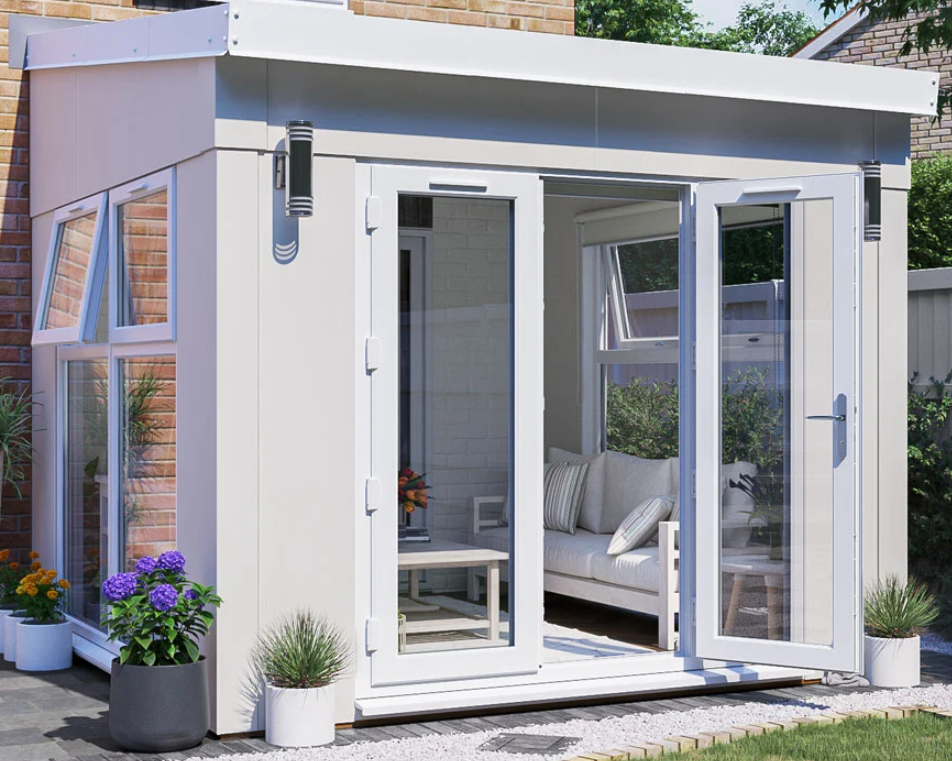
One of the quirkier ways homeowners can avoid planning permission is by using alternatives to the traditional brick and mortar designs. Products such as Dunster House’s Addrooms provide the same use-case experience as a conservatory but at a much lower cost and without the need for planning permission. Easily put up as a DIY job, they also avoid the additional costs of needing a specialist to erect the structure to the rear of your property.
In the same vein, you could consider a garden building – far from being a simple garden shed, it’s possible to create a fully insulated and powered room that sits just across your back lawn rather than attached to your kitchen.
Loft and garage conversions remain attractive options
Loft and garage conversions also remain a popular choice, especially in urban areas where you might not have as much garden as you’d like. While there may be some planning permission involved, loft and garage conversions are typically quick to approve.
Many rear dormer loft projects can proceed under permitted development rules, allowing homeowners to add bedrooms or office space without extending the footprint of the property. Converting existing internal space is usually also a cheaper alternative to full on construction, especially as any wiring you’ll need will already exist.
Homeowners seek lower risk home improvements
Hybrid working continues to drive demand for more space within the home as home offices start to claim rooms, while the idea of moving house isn’t appealing due to mortgage rates being in a bad place. At the same time, the few buyers still active are increasingly prioritising practical, ready-to-use spaces over fixer-upper projects.
Savills noted that although housing transactions have begun to recover, appetite for major improvement works has yet to follow at the same pace. The result is a growing market for flexible home improvement solutions that offer extra living space without big legal or construction costs tied into them. It would be wise to still check local permitted development rules before starting any project though. Regulations can vary depending on property type, location and previous alterations!
