


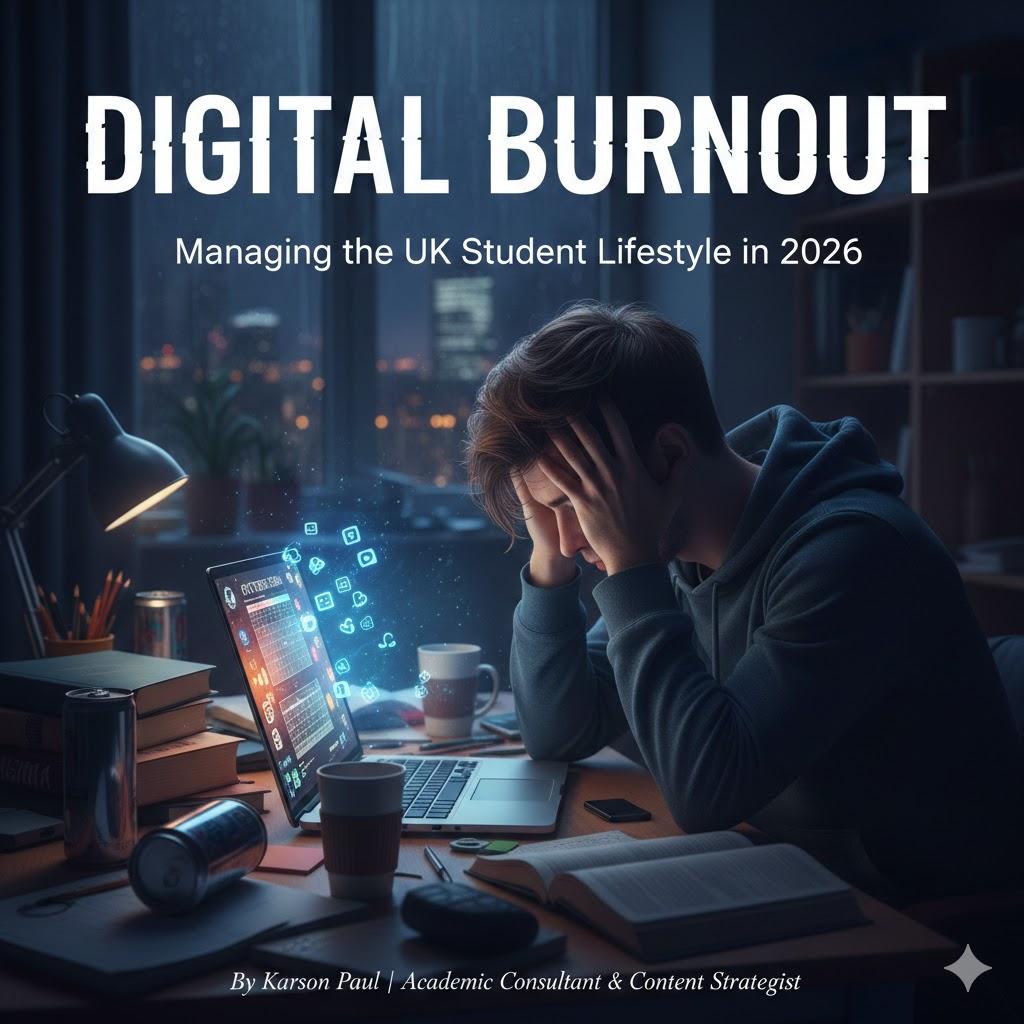
By Karson Paul | Academic Consultant & Content Strategist
The life of a modern student in the UK is inherently digital. From the lecture halls of Russell Group universities to sixth-form colleges in Manchester, an “always-on” culture is the new standard. Laptops have replaced exercise books, and virtual platforms have replaced the traditional common room.
However, as the line between academic productivity and digital leisure blurs, a new challenge has emerged: Student Digital Burnout. Recent data suggests that over 55% of UK students report significant daily stress, much of it linked to the pressure of maintaining a digital presence while meeting rigorous UCAS requirements and academic demands.
Understanding Student Digital Burnout in the UK
For high school and university students, the digital world is a double-edged sword. While the internet provides unparalleled access to information—whether you are seeking complex scientific journals, an essay writing service , or professional expert assignment guidance for a difficult paper—this constant connectivity comes at a cost. Unlike previous generations, today’s students never truly ‘leave’ school. Notifications regarding A-Level deadlines and peer discussions follow them home. This creates a stress loop: the same screen used for revision is the one that prevents the brain from entering a rest state.
The Physical and Mental Toll of 24/7 Connectivity
According to recent UK health reports, the average young adult spends over six hours a day online. For those juggling GCSEs or degree modules, prolonged screen use is directly linked to:
- Digital Eye Strain (DES): Symptoms include headaches and “dry eye,” often aggravated by poorly lit dorm rooms.
- Sleep Disruption: Blue light suppresses melatonin, making it harder to fall asleep after a late-night revision session.
- Academic Fatigue: Constant multitasking between social media and research reduces “deep-focus” capabilities.
How to Reduce Screen Time While Studying: 3 Proven Strategies
To thrive in the 2025/26 academic year, UK students must transition from being “passive consumers” of technology to “intentional users.”
1. The 20-20-20 Rule for Eye Health
To combat strain, UK opticians recommend the 20-20-20 rule: Every 20 minutes, look at something 20 feet away for at least 20 seconds. This simple habit allows eye muscles to relax and reduces “screen-induced” headaches.
2. “Deep Work” Blocks for A-Level and GCSE Revision
The brain is not designed for constant task-switching. When preparing for major exams, use the Pomodoro Technique: 25 minutes of total digital isolation followed by a 5-minute screen-free break. This ensures that time spent on educational platforms remains productive rather than performative.
3. Digital Minimalism and Notification Audits
Audit your notifications. By silencing non-essential apps during study hours, you reclaim your cognitive “bandwidth,” leading to faster task completion and lower anxiety levels.
Utilizing Technology for Good: Breaking the Stress Cycle
The key is to use technology as a supportive tool rather than a distraction.
- Mental Health Apps: UK-based resources like Hub of Hope or Student Minds offer digital support for those feeling overwhelmed.
- Educational Support: When the workload becomes unmanageable, utilizing reputable academic support services, such as getting assignment help at Myassignmenthelp.com , can provide the clarity needed to move forward. These platforms act as a bridge during high-pressure exam seasons, helping students structure their thoughts and understand complex topics.
UK Student Resource Note: If you are feeling overwhelmed, the NHS Every Mind Matters platform offers 24/7 digital support tailored specifically for students in England, Scotland, Wales, and NI.
Frequently Asked Questions
Q.1 How can I tell if I am experiencing “Digital Burnout” or just regular exam stress?
Exam stress is usually tied to a specific deadline, but digital burnout feels like a persistent “brain fog” that remains even after you stop studying. Indicators include irritability when away from your phone and a cynical attitude toward your coursework.
Q.2 Is using AI tools for brainstorming considered “active” or “passive” screen time?
In 2026, this is active usage—provided you drive the logic. Using AI to structure an essay plan or clarify a thesis is productive; relying on it to do the thinking for you leads to “learning anxiety.”
Q.3 How much screen time is “too much” for a UK student?
UK health guidelines suggest that mental well-being can decline when recreational screen time exceeds 6 hours daily. However, quality matters more. Using reputable academic platforms for 4 hours is far more beneficial than 4 hours of mindless scrolling.
About the Author
Karson Paul is an experienced content manager and academic consultant at Myassignmenthelp.com. With over a decade of experience in digital education and student wellbeing, Michael specializes in creating strategies that help students in the UK navigate the intersection of technology and academic success.
